



The ATS 2026 International Conference honored the recipients of the Recognition Awards for Scientific Accomplishments on Monday afternoon, as honorees shared inspiring accounts of their careers and the seminal contributions that advanced their field’s fundamental understanding of lung pathophysiology and pulmonary clinical care.
The 2026 recipients for the ATS Recognition Awards for Scientific Accomplishments were:
- Nizar N. Jarjour, MD, ATSF, chief of the Division of Allergy, Pulmonary and Critical Care Medicine and Ovid O. Meyer Professor of Medicine at the University of Wisconsin-Madison
- Reena Mehra, MD, MSCR, ATSF, professor of pulmonary, critical care, and sleep medicine, and A. Bruce Montgomery, MD, American Lung Association Endowed Chair in Pulmonary and Critical Care Medicine at the University of Washington
- Gloria S. Pryhuber, MD, professor of pediatrics in the Division of Neonatology at the University of Rochester Medical Center
- Prescott Woodruff, MD, MPH, chief of the Division of Pulmonary, Critical Care, Allergy and Sleep Medicine at UCSF Health
Airway Inflammation in Asthma: Mechanisms and Consequences
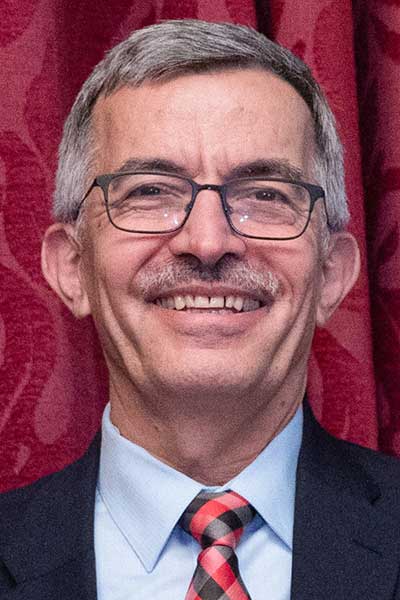
In early work on exercise-induced asthma, Dr. Jarjour and colleagues assessed inflammation markers in the airways immediately following exercise. The study challenged the prevailing understanding of exercise-induced asthma as an inflammatory condition. Their bronchoscopy-aided analyses led them to conclude that there was no clear evidence of airway inflammation in exercise-induced asthma.
In the 1980s and 1990s, definitions of severe asthma were heterogeneous, as were the hypotheses on disease pathogenesis. The understanding of severe asthma pathophysiology was limited, in part due to the challenge of conducting invasive studies in patients with significant asthma burden in a laboratory setting. Indeed, bronchoscopy was contraindicated at that time in patients with severe asthma.
To address this gap, the National Institutes of Health established the Severe Asthma Research Program (SARP) in 2001, a network linking seven preeminent asthma clinical university centers and a data coordinating center.
“I, along with my colleagues in Wisconsin, Loren Denlinger and Bill Busse, have been privileged to be part of SARP since its inception,” Dr. Jarjour said, “Today, the SARP network has generated more than 100 scientific publications, and it is the most prominent cohort of patients with severe asthma anywhere in the world.”
Groundbreaking research conducted by Dr. Jarjour and colleagues has clarified the impact of asthma-associated systemic inflammation on arterial endothelial cells, adipocytokines, skeletal muscle adiposity, and more.
Dr. Jarjour is also a member of the NIH’s Precision Medicine in Severe and/or Exacerbation Prone Asthma (PrecISE) program, publishing most recently, the design of a novel biomarker-stratified adaptive asthma trial that seeks to assess five different interventions.
“We should really start thinking of asthma as a systemic disease with a systemic manifestation,” Dr. Jarjour said.
A Journey Unlocking the Cardiopulmonary Consequences of Sleep Disorders

Mentored by “trailblazers” Kingman Strohl, MD, and Susan S. Redline, MD, MPH, recipient of the 2025 Edward Livingston Trudeau Medal, Dr. Mehra has become a pioneer in sleep and cardiovascular medicine in her own right. Her research in the “relatively young” field of sleep medicine has yielded practice-changing and mechanistic insights into the association between sleep and cardiovascular health, illuminating the relationship between sleep-disordered breathing and atrial fibrillation (AF).
In the Outcomes of Sleep Disorders in Older Men Study (MrOS), Dr. Mehra and colleagues uncovered an association between the severity of sleep-disordered breathing and progressively increasing likelihood of AF and complex ventricular ectopy.
Dr. Mehra has also led, along with her team, the establishment of the Sleep Signals, Testing, And Reports LInked to patient Traits (STARLIT) Registry. This large clinical registry currently includes over 275,000 sleep studies.
In a recent study, Dr. Mehra and colleagues leveraged polysomnography data from over 43,000 participants in the STARLIT Registry to query the relationship between sleep-based phenotypes and increased longitudinal risk of AF. Their analyses showed that hypoxia and, perhaps, sleepiness were strongly associated with incident AF.
“As we are in this era right now of considering precision medicine and more targeted therapies for specific individuals, this information is helpful,” Dr. Mehra said, as it can inform tailored treatment approaches for patients with sleep-disordered breathing at risk of AF.
Sleep medicine provides fertile ground for parsing large repositories of physiologic data for meaningful patterns of sleep dysfunction and clinical outcomes, bolstered by artificial intelligence models.
This principle is illustrated by the foundation model developed by Dr. Mehra and colleagues, which helped identify subpopulations with unique health trajectories among a diverse dataset representing 10,000 patients observed for a mean period of 14.5 years. The model development was supported in part by the Cleveland Clinic-IBM Discovery Accelerator Award given to Dr. Mehra and her team.
Building a Comprehensive Molecular Lung Atlas: Advancing Pediatric and Adult Lung Health through Investigator Collaboration

Dr. Pryhuber’s early work ranged from the “straightforward” characterization of stored amniotic fluid samples using ELISA to mouse model studies of bone marrow transplants, and then to the impressive suite of large-scale multi-omics data projects for which she serves as principal investigator. These efforts were connected by a through-line — an abiding interest in applying molecular biology methods to characterize the human lung and understand prematurity, as well as a commitment to address respiratory mortality and morbidity by fostering active global collaborative research.
She is principal investigator for the NIH Human Lung BioMolecular Multi-Scale Atlas Program (HuBMAP-Lung), the National Heart, Lung, and Blood Institute’s Lung Development Molecular Atlas Program Human Tissue Core (LungMAP-HTC), and the multicenter NIH Prematurity and Respiratory Outcomes Program (PROP).
In her role leading the LungMAP effort, Dr. Pryhuber established the BioRepository for Investigation of Diseases of the Lung Extended (BRINDL), a comprehensive human tissue core and biorepository created to facilitate research on normal and diseased lung tissues from early development into adulthood. Over 82 research laboratories have utilized samples from BRINDL, resulting in 81 publications to date.
In 2024, the ATS assembly on Respiratory, Cell, and Molecular Biology (RCMB) awarded Dr. Pryhuber and her team funding for their project “Collaborative, Cross-Consortium and Country, Lung Cell Nomenclature Project (C3LCN).” The uniform lung cell nomenclature developed in C3LCN is currently stored on LungMap.net, along with over 800 multimodal datasets.
Dr. Pryhuber issued a call to action, encouraging the audience to review these datasets, saying, “There is much more to be done, and much that can be done in silico by many of you.”
Molecular Phenotyping of Obstructive Lung Diseases
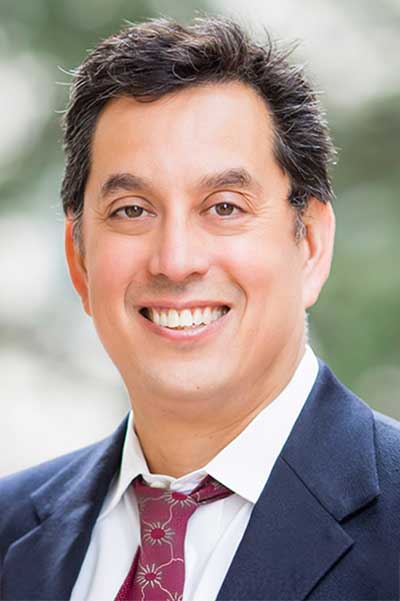
Prescott G. Woodruff, MD, MPH, who joined the ceremony virtually, credited his professional path to his parents — a “doctor’s doctor” and a physician focused primarily on research — who formed his “platonic ideal of a physician-scientist.”
“What a physician-scientist does in many instances is connect the full spectrum of biology to patients, from molecules to cells, to tissues, to organs, to physiology, and then to patients. And this is a difficult task. It can take many years to learn all the tools necessary to do this,” Dr. Woodruff said.
In one seminal study, Dr. Woodruff and colleagues analyzed the relationship among differentially expressed bronchial biopsy genes and clinical measures of allergy and inflammation.
Some healthy patients, as well as those with asthma, had gene expression signatures characteristic of high Type 2 inflammation, while a smaller subset within the asthma cohort had a low Type 2 inflammatory signature.
“This [finding] started a whole area of asthma clinical research that not only pushed forward the field, but in my career, was the proof of concept of the following overarching model: [In many] diseases, we see these clinical phenotypes that reflect underlying biological endotypes, and these endotypes can have biomarkers associated with them and could direct you to use targeted therapy,” Dr. Woodruff noted.
In the asthma field, the prevalence of high and low Type 2 inflammatory signatures is not only accepted dogma, but it has also fostered the development of biologic therapies targeting components of the T-helper cell 2 (Th2)-driven Type 2 inflammatory pathway.
Dr. Woodruff and colleagues have since extended these observations in COPD, including in the SPIROMICS cohort and the sister study SOURCE, two large-scale research projects that leverage multi-omics findings, imaging data, and participant feedback on their health.
Extend Your ATS 2026 Experience with ATS NOW

ATS NOW offers conference highlights, peer-reviewed sessions, and access to leading experts in pulmonary, critical care, and sleep medicine. ATS 2026 attendees receive complimentary access to the platform through the rest of the calendar year!