



Over the past 40 years, pulmonary arterial hypertension (PAH) has been transformed into a treatable chronic condition thanks to advances in vascular biology, such as the identification of prostacyclin deficiency, endothelin overexpression, impaired nitric oxide signaling, and dysregulated activin signaling.
During the President’s Symposium on Monday at the ATS 2026 International Conference, “Celebrating Science: Pulmonary Hypertension From Basic Discoveries, To Translational Breakthroughs, To Clinical Applications,” experts offered insights into the history behind these major PAH therapeutic pathways and looked to the future of the field.
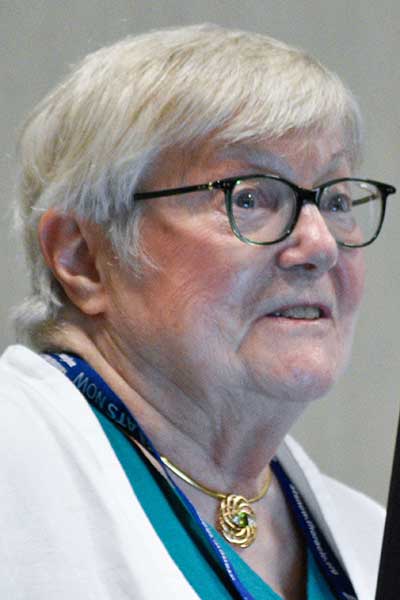
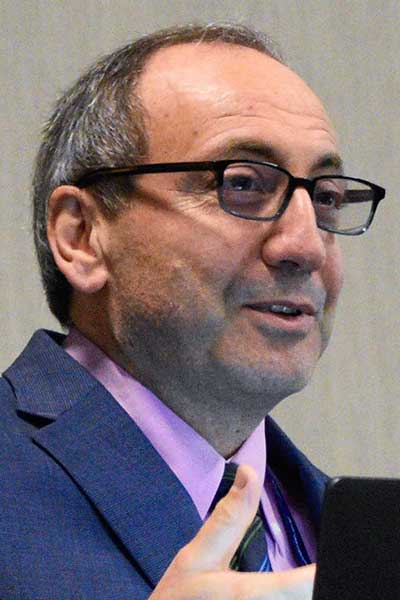
“Pulmonary hypertension is the best example of celebrating science over the past 50 years — breakthrough upon breakthrough upon breakthrough, compared to other diseases,” ATS Immediate Past President Raed A. Dweik, MD, MBA, ATSF, said at the start of the symposium. “You’ll be hearing about them today from people who lived them, who developed them, who really started this whole therapeutic field, and pulmonary hypertension based on the pathobiology.”
Sharon I. S. Rounds, MD, ATSF, associate dean for translational science and professor of medicine and of pathology and laboratory medicine at the Brown University Warren Alpert Medical School, outlined the origins of pulmonary hypertension therapeutics.
Shortly after the clinical syndrome and pathology of primary pulmonary hypertension were first defined, international meetings hosted by the World Health Organization, ATS, and others set the standard for clinical research in pulmonary hypertension, Dr. Rounds said. This led to the development of important case registries and multicenter trials. It also set off a wave of critical collaboration, which has resulted in remarkable progress, she said, as findings about calcium channel blockers in animal models translated to successful therapeutics in people.
“Never underestimate the power of a new idea,” Dr. Rounds said.
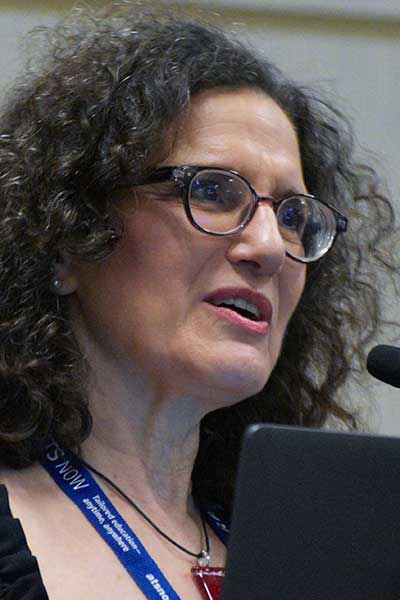
Vallerie V. McLaughlin, MD, the Kim A. Eagle, MD, Endowed Professor of Cardiovascular Medicine and professor of internal medicine at the University of Michigan Medical School, detailed the history of the first successfully targeted pathway, prostacyclin.
“I really do feel like targeting the prostacyclin pathway has been a 30-year roller coaster,” Dr. McLaughlin said, “There’s all this excitement; we finally have a treatment. Then, oh my gosh, there are oral treatments; who wants an IV? We go down, but there’s still a role, and now there’s another pathway.”
During her presentation, Dr. McLaughlin explored prostacyclin’s unique contributions to clinical trials in PAH and discussed the pathway’s place amid the evolution of treatment algorithms and the emergence of newer therapies for PAH. Today, there are many different forms of prostacyclins and combinations of use, including less invasive prostacyclins that can be prescribed for more patients, she said. Through it all, the prostacyclin pathway remains foundational and enduring in PAH therapy.
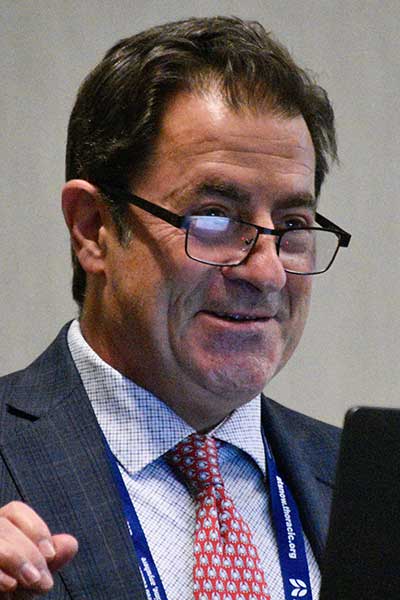
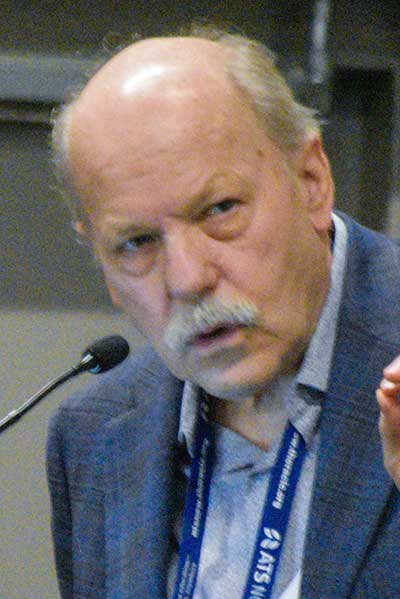
Nicholas S. Hill, MD, professor at the Tufts University School of Medicine and a pulmonologist at Tufts Medicine, spoke about how work on the endothelin signaling pathway moved from the bench to the bedside.
The story of endothelin in PAH is one of iterative discovery, rooted in solid science and striving for steady improvement, he said. These drugs are established, well-tolerated, and effective in combination, but looking toward the future, Dr. Hill posed the question, “Can we make them better?”
“One thing that I wonder about is quadruple, and perhaps even quintuple, therapies,” he said. “Do we really need all these drugs, or at some point, do we de-escalate? And another question is, can we have more precise blockers using small molecular agents or antibody-based therapies?”
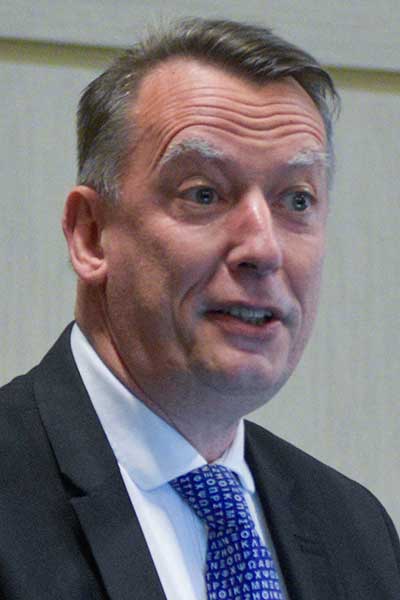
Mark T. Gladwin, MD, the John Z. and Akiko K. Bowers Distinguished Professor and dean at the University of Maryland School of Medicine, provided an overview of the endothelial biology and clinical translation of the nitric oxide pathway and helped contextualize advancements in this area.
“This has been the best first example of taking fundamental high-impact discovery basic science, and rapidly translating it to the clinic,” he said. “Forming interdisciplinary, international collaborative groups with excellence in clinical trial design, and rapidly translating things to the clinic. It’s really become a role model for other orphan diseases in pulmonary medicine, and beyond.”
Marc Humbert, MD, PhD, professor of respiratory medicine at Université Paris-Saclay, France, offered insight into the newest of the four pathways, activin signaling inhibition. The biologic therapy sotatercept kickstarted a new era of therapeutics targeting this complex pathway, which is overactive in the lungs of patients with PAH. Dr. Humbert discussed the rationale behind the multiple clinical trials of the treatment.
“Our idea was not to replace the beautiful molecules we have just heard about from the other speakers,” he said, “but we wanted sotatercept to be considered as an add-on therapy on top of what is currently available, in order to achieve maximum benefit in these patients.”
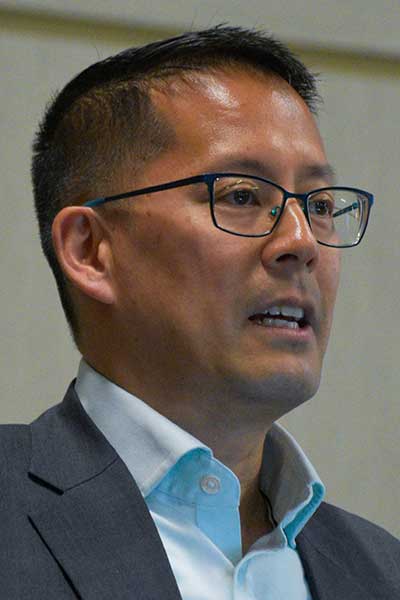
Stephen Y. Chan, MD, PhD, ATSF, professor of medicine and director of the Vascular Medicine Institute at the University of Pittsburgh, closed the symposium with a look at new frontiers of innovation in PAH therapy.
The future is already here, Dr. Chan said. Basic, translational, and clinical research in pulmonary hypertension are converging in ways never seen before, he said, and insights from interorgan communication and new targets for drug development will shape discoveries across pulmonary hypertension and beyond.
“I believe that, as the past speakers have shown, the new pulmonary hypertension therapies built on the landmark discoveries over the past half century are really pushing us further into precision medicine practice and really challenging our understanding of what pulmonary hypertension and what pulmonary vascular disease is,” he said.
In addition, AI-guided discovery and other technology-aided processes will continue to accelerate innovation across fields, Dr. Chan noted.
“It is not only a renaissance of discoveries that’s going to benefit our patients — I really do believe that. I also think that we’re witnessing a transformation of the field,” he said. “As we saw, the history has been a small, dedicated group of scientists studying an orphan disease. I think that we are now expanding to a much larger community, grappling with much larger questions that are really plaguing our generation, in terms of health care and health obstacles.”
Extend Your ATS 2026 Experience with ATS NOW

ATS NOW offers conference highlights, peer-reviewed sessions, and access to leading experts in pulmonary, critical care, and sleep medicine. ATS 2026 attendees receive complimentary access to the platform through the rest of the calendar year!