



The Clinical Year in Review series continued Monday, May 18, at the ATS 2026 International Conference with a review of groundbreaking studies and key lessons, from both positive and negative trial findings, in acute respiratory distress (ARDS) and acute hypoxemic respiratory failure (AHFR), critical care, sepsis, and post-ICI care/ICU rehabilitation.
Acute Respiratory Distress Syndrome/Acute Hypoxemic Respiratory Failure

Nida Qadir, MD, associate professor of medicine at the UCLA School of Medicine, said that despite evidence from many landmark trials over recent decades that have informed practice guidelines and shaped patient care, “mortality for ARDS and AHRF remains high.”
Dr. Qadir discussed key trials in ARDS/AHRF that highlighted knowledge gaps across numerous domains of gas exchange and oxygenation targets, noninvasive support methods, mechanical ventilation approaches, and more.
Although 90-day mortality did not differ between conservative vs standard oxygenation therapy among critically ill patients who underwent mechanical ventilation in the UK-ROX trial, Dr. Qadir noted that UK-ROX was one of the largest and most cost-effective patient-level randomized critical care trials to date.
The SOHO trial did not demonstrate a mortality benefit of high-flow over standard oxygen delivery. However, high-flow nasal oxygen resulted in “true reduction in intubation,” which, along with the reduced dyspnea, is an important patient-centered outcome, Dr. Qadir said.
In her review of another negative trial — the ACTiVE study comparing an automated closed-loop ventilation system (ACLVS) to protocolized conventional ventilation — Dr. Qadir noted that both modalities had high adherence and only 32 percent of patients in the ACLVS required intubation for respiratory failure.
Dr. Qadir also discussed the EiTVent, PROMIZING, and the PHIND trials.
Critical Care
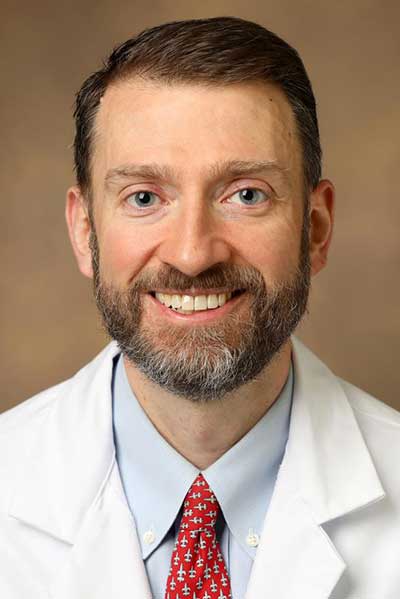
Jonathan D. Casey, MD, MSCR, associate professor of medicine at Vanderbilt University Medical Center, reviewed findings and practice implications from the RSI trial, which compared ketamine and etomidate among patients undergoing emergency tracheal intubation.
Etomidate has been removed from the market in six of the G20 countries, but it is the most used anesthetic agent for emergency intubation in the U.S., Dr. Casey said. However, the alternative agent, ketamine, also has adverse effects.
Despite comparable mortality outcomes, Dr. Casey said that he would continue to use etomidate as a first-line option, based on the increased cardiovascular collapse with ketamine compared with etomidate in the RSI study.
The EVERDAC trial compared the arterial catheter (A-line) to the brachial cuff in critically ill adults with shock. Cuff pressures were inferior to early A-lines, as measured by 28-day mortality; however, one in eight patients in the cuff group subsequently received A-lines. Based on this data, Dr. Casey would consider using fewer A-lines and increasing the A-line placement threshold.
The BALANCE study results showed no significant differences in mortality between the seven-day and 14-day antibiotic courses, including in critically ill patients and those with shock. These data suggest that a shorter course may be adequate for most hospitalized patients with bacteremia.
Dr. Casey also reviewed the implications of the IVIO and BICARICU-2 trials conducted in Denmark and France, respectively.
Dr. Casey noted the following themes across the critical care studies over the past year: The highest impact trials in critical care continue to be comparative effectiveness trials rather than trials of new drugs or devices. The most impactful trials are largely conducted by a small number of clinical trial networks, mostly outside of the US.
Sepsis
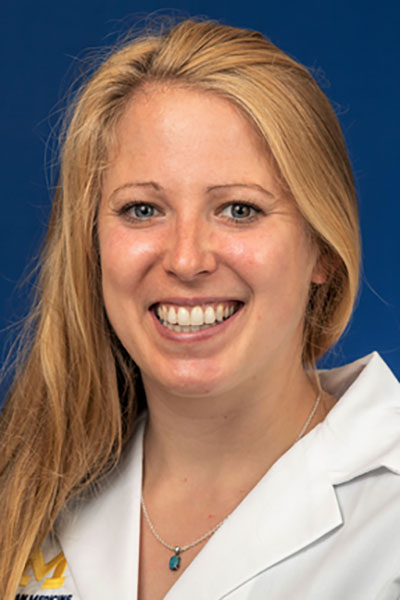
“This was an exciting year in sepsis. We have the Surviving Sepsis Campaign (SSC) guidelines as well as several sepsis clinical trials,” said Elizabeth S. Munroe, MD, MSci, assistant professor at Intermountain Health.
Dr. Munroe noted two domains in sepsis care with impactful changes/trials in the past year — infection management and hemodynamic resuscitation.
In the infection management space, Dr. Munroe discussed the SSC guidelines, which highlight the importance of proactive sepsis screenings and conditional recommendations for standardized ambulance-based sepsis screening.
The guidelines also underscore early intervention, recommending pre-hospital antimicrobial therapy for patients with hypotension and scenarios with an anticipated time-to-hospital over 60 minutes.
Dr. Munroe also noted that the SSC guidelines have clarified definitions of possible, probable, and definite sepsis and added a new recommendation for pre-hospital antibiotic therapy, with a focus on antibiotic stewardship.
Screening hospitalized patients with an electronic alert based on the Quick Sequential [Sepsis-Related] Organ Failure Assessment (qSOFA) bedside instrument reduced mortality in the SCREEN trial; however, qSOFA was less sensitive than other screening tools in previous analyses.
In the hemodynamic resuscitation space, Dr. Munroe discussed the FLUIDS study comparing lactated Ringer’s solution to normal saline, the SUDDICU trial of selective decontamination of the digestive tract, and the ANDROMEDA-SHOCK-2 trial, which evaluated a personalized hemodynamic resuscitation strategy based on capillary refill time.
Dr. Munroe’s key takeaways for her Monday-morning practice changes included: Implementing inpatient sepsis screening, and importantly, pairing screening with follow-up clinical assessments; advocating for selective decontamination of the digestive tract for mechanically ventilated ICU patients; encouraging default use of balanced solutions over normal saline; and integrating capillary refill time as a measure for reassessing resuscitation in patients with septic shock.
Post-ICU Care/ICU Rehabilitation

Tammy L. Eaton, PhD, MSc, RN, FNP-BC, ACHPN, FCCM, FAAN, research assistant professor of medicine at the University of Michigan Medical Center, framed the nascent field of post-ICU recovery and longitudinal survivorship in the context of persistent unmet needs.
“As survival from critical illness has improved, critical care is increasingly shifting toward understanding what happens after ICU discharge and how we support meaningful recovery for survivors,” she explained.
Dr. Eaton reminded the audience that research in the post-ICU care and rehabilitation field is “relatively young,” with post-intensive care syndrome (PICS) first described just over a decade ago.
PICS — which encompasses new or worsening physical, cognitive, or mental health impairments that develop during a critical illness in the ICU and persist after discharge from the hospital — affects 50 percent to 80 percent of ICU survivors.
Dr. Eaton said, “Recognition of PICS has fundamentally changed ICU care.”
However, the burden of post-ICU critical illness survivorship remains substantial.
“Many ICU survivors experience persistent disability, physical disability, frailty, cognitive impairments, psychological distress, sleep disruption, chronic pain, and reduced quality of life long after leaving the ICU. These sequelae contribute to higher readmission rates, worsening chronic disease, burden, persistent disability, and increased long-term mortality,” Dr. Eaton said.
The recurrent theme in Dr. Eaton’s presentation was the “unresolved conceptual, methodological, and implementation challenges across the field” of ICU survivorship research.
Dr. Eaton’s evidence review included WFIT, a single-center randomized trial assessing a telehealth-based ICU recovery intervention in 400 patients with sepsis and/or acute respiratory failure, a longitudinal secondary analysis of the impact of adherence to the ABCDE framework to long-term outcomes of ICU survivors, a large prospective multicenter study of the association between PICS and health-related quality of life, and the IMPROVE trial that assessed whether a 12-week, web-based, combined cognitive and physical training intervention improved cognitive performance among ICU delirium survivors.
Dr. Eaton concluded with a review of the Greater Recovery After Critical Illness (GRACE) report, which underscores the persistent conceptual challenges, evidence gaps, and lack of uniform terminology in critical illness recovery care and research, and provides a roadmap for developing contemporary trial designs and analytical methods to move the field forward.
Extend Your ATS 2026 Experience with ATS NOW

ATS NOW offers conference highlights, peer-reviewed sessions, and access to leading experts in pulmonary, critical care, and sleep medicine. ATS 2026 attendees receive complimentary access to the platform through the rest of the calendar year!