



Marc Peters-Golden, MD, will present “Cyclic AMP vs. Fibrosis: Harnessing Homeostasis and the Power of Pleiotropy” during this year’s ATS J. Burns Amberson Lecture at 4:30 p.m. ET on Sunday, May 17, in the Chapin Theater (Level III, OCCC West Concourse).
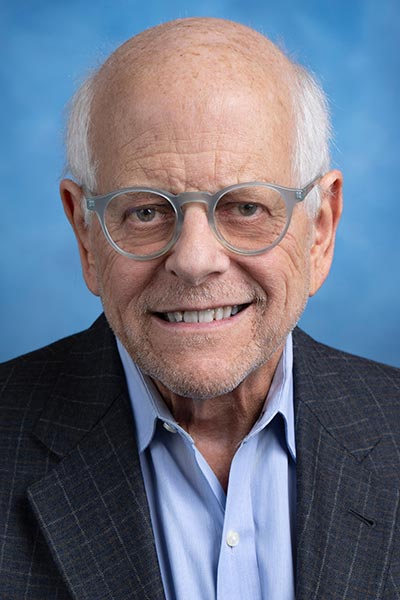
Named for James Burns Amberson, an international authority on chest disease and tuberculosis, this award recognizes major international lifetime contributions to clinical or basic research that have advanced the fundamental understanding of basic, translational, or clinical approaches to respiratory disease, critical illness, or sleep disorders.
The theme of cyclic AMP and fibrosis resolution that Dr. Peters-Golden has chosen for this year’s Amberson Lecture at the ATS 2026 International Conference represents some of his latest research interests in an influential career as an educator, clinician, and researcher who has deepened the field’s understanding of lung inflammation, immunity, and tissue remodeling by employing molecular, biochemical, pharmacologic, and in vivo approaches to study homeostasis and disease.
Cornfields and Marginal Fields
In 1970, a young Marc Golden was making family history when he arrived at Franklin & Marshall College in Lancaster, Pennsylvania — neither of his parents had graduated from high school, let alone attended college. He thrived at the liberal arts school, studying literature, biology, and social sciences. Influenced by the advent of modern environmentalism and the establishment of Earth Day, he created an independent study in environmental biology that culminated in a capstone research project examining the effect of zinc on corn crops grown in fields covering an abandoned zinc mine.
“It was a meaningful first deep dive into research, and it cemented an interest in the environment,” Dr. Peters-Golden recalled. “I thought about going to graduate school to study ecology, but at the last minute realized that it was the effects of environmental problems on human health that interested me the most.”
Deciding on medical school at Duke University, Dr. Peters-Golden would spend one summer working under a young faculty member and pulmonologist, James Crapo, the future 1992–1993 ATS President, who would inspire Peters-Golden to pursue his interests in the cell biology of the lungs. This eventually led to a fellowship research experience studying arachidonic acid metabolism into lipid mediators in lung macrophages.
At that time, it was the protein cytokines — not the comparatively more difficult-to-study lipid mediators — that were receiving most of the field’s attention, grants, and research possibilities. One of the most eminent scientists at the University of Michigan, where Dr. Peters-Golden accepted a faculty position in 1984, memorably advised him that if he wanted to succeed in research, he should shift his investigative focus elsewhere.
“Lipid mediators were hard to measure, and we didn’t have great tools for being able to disrupt them and thereby determine their importance,” Dr. Peters-Golden recalled. “But I wasn’t ready to give them up, because we were finding interesting and novel things.”
Dr. Peters-Golden added that his determination to continue this line of research taught him a vital, timeless lesson: Going beyond mainstream research trends requires a deep understanding of the field that can lead to unexpected and important insights.
“I learned that when you are on the margins of the field, you have to more or less pay homage to what is at the center — and at that time, cytokines were at the center. A cytokine biologist could ignore lipids, and no one would care, notice, or make them account for that. But if you studied lipids in the 1980s or 1990s, you couldn’t ignore cytokines,” he recalled. “So, we learned to use cytokines in our research and found, for example, that administering cytokines to cells completely changed their lipid mediator profile, while adding lipid mediators to cells completely changed their cytokine profile. We learned that these two classes of molecules were talking to each other. I became convinced that a lot of the actions of cytokines were mediated by lipid mediators — something that has gradually become at least a little more recognized and appreciated.”
A Career of Achievements and Future Direction
In more than 40 years of work at the University of Michigan, Dr. Peters-Golden and his laboratory have expanded beyond documenting extensive regulatory cross-talk between cytokines and lipid mediators, including prostanoids. Among a long list of accomplishments, Dr. Peters-Golden and colleagues in his laboratory have shown that a deficiency of leukotrienes in conditions such as HIV/AIDs and malnutrition predisposed to infection susceptibility, characterizing for the first time the ability of lung macrophages to secrete extracellular vesicles containing anti-inflammatory molecules of the SOCS (suppressor of cytokine signaling) family, and showing that this capacity is impaired in various inflammatory conditions and in lung cancer. Additionally, Dr. Peters-Golden and his laboratory established that many of the pivotal actions of lipid mediators reflect their ability to ligate G protein-coupled receptors and signal via either the increase (prostaglandin E2 [PGE2] or prostacyclin) or decrease (e.g., leukotriene B4) of the primordial second messenger cyclic AMP (adenosine monophosphate).
During his Amberson Lecture, Dr. Peters-Golden plans to focus on cyclic AMP and emerging anti-fibrotic therapies for idiopathic pulmonary fibrosis (IPF), including two new drugs — one that blocks the breakdown of cyclic AMP and another, a prostacyclin similar to PGE2, that has inhibitory powers for fibrosis and can be delivered through inhalation.
“A lot of people are probably surprised that cyclic AMP-elevating therapies have emerged for treatment of fibrosis, since they are unaware of the long history of foundational research carried out by our own and other laboratories,” explained Dr. Peters-Golden. “Many will also assume that this first chapter is likely the last. I will explain why I think these new therapies are merely the first generation, not the last generation, of approaches to leveraging cyclic AMP in the treatment of fibrosis and other chronic lung diseases.”
He added that he believes these drugs represent important new directions for the field.
“There’s an awful lot of basic science and translational research that needs to be done, but I believe we can move from the era of inhibiting the fibrotic process to an era of promoting the regeneration of a healthy lung, and I think cyclic AMP therapies can be a part of that, not as a lone wolf, but in partnership with other pathways, other molecules, other strategies, and other approaches,” Dr. Peters-Golden said.
Extend Your ATS 2026 Experience with ATS NOW

ATS NOW offers conference highlights, peer-reviewed sessions, and access to leading experts in pulmonary, critical care, and sleep medicine. ATS 2026 attendees receive complimentary access to the platform through the rest of the calendar year!