



It has been nearly four years since the U.S. Supreme Court delivered its decision in Dobbs v. Jackson Women’s Health Organization, which overturned Roe v. Wade and eliminated the federal constitutional right to abortion after nearly 50 years. In 2024, the Supreme Court dismissed lawsuits seeking to prevent the Food and Drug Administration from expanding access to mifepristone and banning emergency abortion procedures in Idaho. Just days ago, the court handed down another ruling that preserved access to mifepristone.
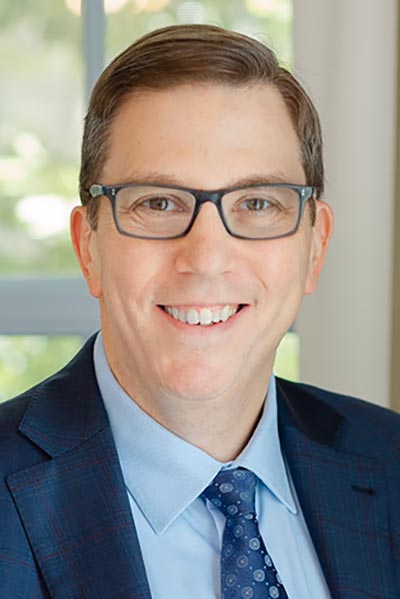
According to Stephen Vladeck, JD, a legal scholar, author, and professor of law at Georgetown University Law Center, these rulings are symptomatic of a new paradigm between the Supreme Court and medical practice in the U.S.
“Whatever used to be true about medical practitioners being able to mostly view the Supreme Court as a curiosity, and not one that necessarily affects them on a day-to-day basis, isn’t true anymore,” he said. “Due to the way the court has restructured its power and relationships with other branches of government in the last five to 10 years, the Supreme Court now matters a lot more to the typical medical practitioner than it would have as recently as a decade ago.”
Vladeck will deliver Monday’s Keynote Series lecture at the ATS 2026 International Conference about the judicial impact on health care from 8–8:45 a.m. ET in Room W320 (Level III, OCCC West Concourse).
Over the past decade, an increasing number of judges have inserted themselves into policy disputes that were historically left to medical experts and professionals, according to Vladeck, leading to the current landscape of instability in administrative law and litigation emergencies.
“Regardless of your politics, ideology, or area of practice as a medical professional, that sort of alteration in the relationship between the courts and medicine is to me, in the long-term, not a good one,” said Vladeck.
The Supreme Court’s influence on the industry isn’t limited to its decisions on cases directly related to health care. Vladeck explained that rulings on marine wildlife and power plant regulations, which upended decades of settled law governing federal agencies, could leave the Department of Health and Human Services (HHS) vulnerable to challenges to Medicare prescription drug benefits and other litigation once considered settled by policymakers.
“The court has handed down rulings that have made it much easier for specialized interest groups to challenge almost anything the HHS does,” explained Vladeck. This has, I think, further destabilized the regulatory landscape when it comes to all the ways the HHS affects all of the folks at the ATS conference, whether it’s funding, on the regulatory side, or functions of the Food and Drug Administration or Centers for Disease Control and Prevention.”
According to Vladeck, these changes could trickle down from the federal government’s regulatory landscape, opening local and state medical boards to a potential influx of legal challenges.
Despite the challenges ahead, Vladeck isn’t fatalistic about the future of the courts. While he argues that Congress’s influence and oversight on the Supreme Court has eroded over time, he also believes reforms can be made.
“I don’t think this is a permanent feature of our politics; I think it’s just the moment we are in,” Vladeck said. “It’s worth helping folks understand that the court is an institution just like other institutions, and paying more attention to it, as well as changing how we talk and think about it, could be the first in a slow but steady series of steps towards the kinds of reforms that I think would make everyone’s lives a bit easier.”
To follow Vladeck’s work and learn more about the federal legislative landscape, attendees can read his award-winning, New York Times bestselling book, “The Shadow Docket: How the Supreme Court Uses Stealth Rulings to Amass Power and Undermine the Republic,” as well as subscribe to his “One First” weekly newsletter, which aims to “make the Supreme Court’s rulings, procedures, and history more accessible to all.”
Extend Your ATS 2026 Experience with ATS NOW
ATS NOW offers conference highlights, peer-reviewed sessions, and access to leading experts in pulmonary, critical care, and sleep medicine. ATS 2026 attendees receive complimentary access to the platform through the rest of the calendar year!