



New advancements in asthma therapies have shifted the goals of patient treatment from symptom and exacerbation management to improved disease control and potential clinical remission. Achieving that goal requires an acceptable definition of asthma remission and prospective clinical trials to determine the patient and treatment factors to target.

The ATS 2026 International Conference Scientific Symposium, “Aiming Higher: The Journey Toward Asthma Remission,” will discuss current definitions and available evidence on asthma remission, as well as the obstacles and challenges that lie ahead. The symposium will take place from 11 a.m.–12:30 p.m. on Wednesday, May 20, in Room W304 E-H (Level III, OCCC West Concourse).
The symposium will begin with a review of the evolution of asthma treatment goals by Nizar Jarjour, MD, ATSF, the Ovid O. Meyer Professor of Medicine at the University of Wisconsin and co-chair of the symposium.
The session will then pivot to one of the primary challenges in discussing asthma remission: defining the term.
“I believe the main challenge is separating disease damage from disease activity,” said Sandhya Khurana, MD, professor of pulmonary and critical care medicine at the University of Rochester, and session co-chair. “Asthma is a heterogeneous disease, and assessment of asthma control and remission relies heavily on patients’ symptoms as objective data, including lung function and inflammatory markers, which are not always helpful.”
Multiple cohorts of researchers and clinicians have applied varying criteria for clinical asthma remission, but there is currently no applicable consensus definition. Njira Lucia Lugogo, MD, clinical professor of internal medicine at the University of Michigan, will examine several interpretations of asthma remission, weighing the strengths and potential limitations of each.
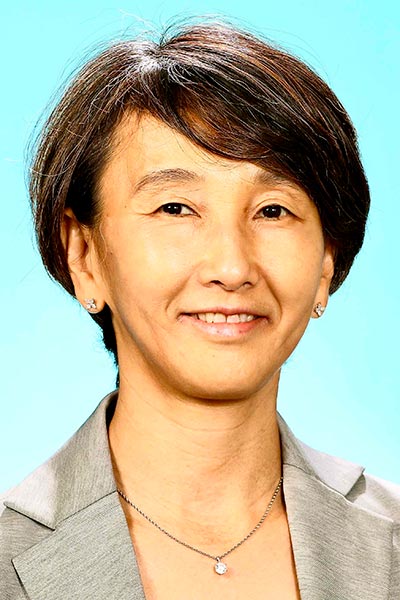
“We’re not aiming to come up with a unified definition during this session; rather, we’ll be discussing the current landscape, evidence, and literature about asthma remission, plus the work that has been done with various cohorts,” explained Kaharu Sumino, MD, MPH, ATSF, professor of medicine in the Division of Pulmonary and Critical Care Medicine at Washington University in St. Louis, and co-chair of the symposium.
Praveen Akuthota, MD, professor of clinical medicine at the University of California, San Diego, will complement Dr. Lugogo’s presentation by further analyzing the obstacles and challenges in defining asthma remission and how they can be overcome to optimize future studies investigating asthma remission in diverse, cross-sectional patient populations.
“Once we’re able to identify potential limitations of applying a particular definition for asthma remission, we can apply critical thinking to studies and the bedside to work around them,” explained Dr. Sumino.
This session will also trace the history and progression of asthma treatments, from inhaled corticosteroids and long-acting beta agonists to breakthrough biologics. David Brendan Price, FRCGP, MA, primary care respiratory society professor of primary care respiratory medicine at the University of Aberdeen, United Kingdom, will lead this portion of the symposium. While biologics have seemingly opened the door for what could be defined as asthma remission, Dr. Sumino asserted that more development is needed to help all patients with asthma.
“Biologics have been life-changing for our patients with severe asthma and have made ‘on-treatment remission’ a realistic goal,” Dr. Khurana explained. While these drugs have inarguably benefitted many people with asthma, further advancements are needed to help everyone who has the disease. “Even with current biologics, only about one in five patients would achieve remission, depending on the definition being used. So, there’s still more work to do,” Dr. Sumino said.
Dr. Sumino also emphasized the importance of considering disparities and health equity when considering asthma treatment and remission.
“We have all these new medications available and in development, but in the U.S. and other parts of the world, we have vulnerable populations where we’re still not quite to the place we want to be to talk about clinical remission,” she said.
The symposium will conclude with a panel discussion led by the presenters and session chairs.
To explore additional asthma-related educational sessions at the ATS 2026 International Conference, visit the session tracker on the ATSConference365 platform.
Extend Your ATS 2026 Experience with ATS NOW

ATS NOW offers conference highlights, peer-reviewed sessions, and access to leading experts in pulmonary, critical care, and sleep medicine. ATS 2026 attendees receive complimentary access to the platform through the rest of the calendar year!