



The first of two Adult Critical Care Core Curriculum sessions to be presented at the ATS 2026 International Conference will deliver current best practices and guidance in acute respiratory failure. The opening session is scheduled for 2:15–3:45 p.m. ET on Sunday, May 17, in Room W224C of the Orange County Convention Center.
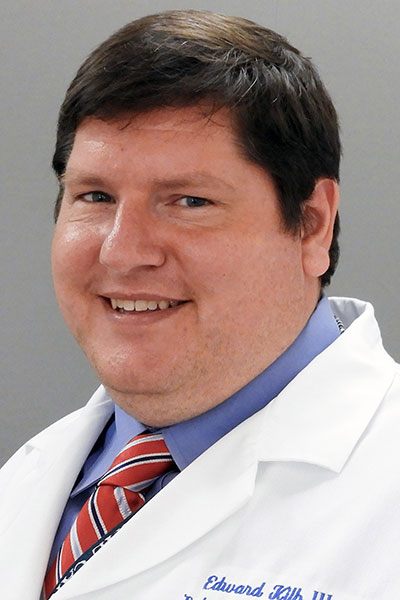
“As critical care is a rich learning environment, we looked at this year’s core as getting back to basics with a topic that applies to every ICU, which is acute respiratory failure,” said Edward Kilb, MD, ATSF, associate professor of medicine at the Medical University of South Carolina, and co-chair of the Critical Care Core Curriculum.
The second session in the curriculum, also from 2:15–3:45 p.m. ET on Monday, May 18, will focus on the latest guidance on mechanical ventilation.
“The two sessions are meant to be cohesive, so the topics build off one another,” Dr. Kilb said. “Our recommendation is that if you have a practice where you are managing critically ill patients, attending both of these sessions will be extremely beneficial to you and how you approach a very common patient care scenario in the ICU.”
Sunday’s session will focus on acute respiratory failure with strategies for management before invasive mechanical ventilation — including devices such as high-flow nasal cannula, non-invasive ventilation — and best practices for securing endotracheal intubation.
“All of these topics and presenters will focus on recent updates and the latest information available on recent guidelines and recommended techniques to improve intubation,” said Javier Diaz-Mendoza, MD, ATSF, associate professor of medicine at Henry Ford Hospital-Wayne State University, and co-chair of the Critical Care Core Curriculum.
The objective of the first topic, presented by Adam John Hayek, DO, a physician at Baylor University Medical Center, is for pulmonary and critical care professionals to understand the key physiologic mechanism indicating the use of high-flow nasal cannula for patients with hypoxia, as well as how to perform titration.
Julie Marie Neborak, MD, assistant professor in the Department of Internal Medicine at Rush University, will outline best practices for the use of non-invasive ventilation in the ICU. The goal is to inform attendees about the different modalities of non-invasive ventilation and to understand which complications may arise and the precautions to take.
In the last presentation of the first session, Alex Garbarino, MD, a pulmonary and critical care specialist at Henry Ford Health, will share strategies to improve outcomes during intubation. Noting that discussion around this topic has increased in recent years, Dr. Diaz-Mendoza said the speakers will review numerous factors that can determine when a patient requires invasive mechanical ventilation.
“There have been recent publications on specific recommendations involved in the placement of an endotracheal tube, as well as in the use of different sedatives, which could lead to better outcomes in intubation,” Dr. Diaz-Mendoza said.
Dr. Kilb noted that the expert speakers for this year’s Critical Care Core Curriculum series primarily practice critical care medicine, as well as study and educate others about respiratory failure and the varying modalities of mechanical ventilation, leading to what he and Dr. Diaz-Mendoza expect will be a highly engaging range of presentations and panel discussions.
“If you practice in critical care, these are sessions you do not want to miss,” Dr. Kilb said.
Each session supports clinicians engaged in maintenance of certification (MOC) activities, and the co-chairs note that examples of sample questions and scenarios will be part of the programming. This allows practitioners to engage with current information about their practices with emphasis on building knowledge and skills toward MOC Medical Knowledge points.
Extend Your ATS 2026 Experience with ATS NOW
ATS NOW offers conference highlights, peer-reviewed sessions, and access to leading experts in pulmonary, critical care, and sleep medicine. ATS 2026 attendees receive complimentary access to the platform through the rest of the calendar year!