



Demetre Daskalakis, MD, MPH, chief medical officer of Callen-Lorde Community Health Center, offered an overview of the landscape and uncertain future of vaccine adoption in the United States during Sunday morning’s Keynote Series at the ATS 2026 International Conference. His lecture traced major milestones in immunization while urging health care leaders to defend science-driven decision making in an increasingly complex and polarized environment.
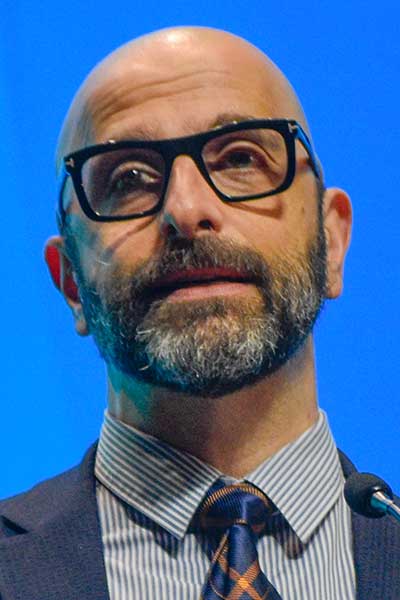
Placing vaccines within the broader history of public health, Dr. Daskalakis explained that early progress relied heavily on environmental improvements such as clean water and sanitation. These foundational efforts gradually expanded to disease-specific interventions, including vaccines and antibiotics. Vaccination stands out as a cornerstone of disease prevention, having transformed once-common illnesses into rare or eliminated threats, he said.
He described the concept of a “vaccine moonshot” — a national vision of eliminating preventable infectious diseases. Achieving such a goal, he emphasized, requires three critical elements. “You need scientific innovation, you need political will, and you need community support.” This triad has historically driven successful immunization campaigns and remains essential today.
To illustrate this, Dr. Daskalakis highlighted polio as a defining case study. Before vaccines, polio caused thousands of deaths annually and deeply influenced public perception of infectious disease risk. Although non-medical interventions helped reduce transmission, only widespread vaccination brought cases close to zero. “This success established a key principle: eliminating infections through vaccination also eliminates the most severe outcomes associated with them,” he said.
The story of measles offered a more nuanced example. Before the vaccine was developed, millions of cases occurred annually in the United States. Even with improvements in health care and sanitation, measles persisted at levels that continued to cause harm. The vaccine introduced in the 1960s dramatically reduced cases, but setbacks followed when vaccine uptake declined.
A major measles resurgence between 1989 and 1991 revealed critical gaps in both coverage and equity. The outbreak disproportionately affected Black and Hispanic children, largely due to barriers in access and cost. In response, policymakers introduced the Vaccines for Children program, an initiative specifically designed to eliminate these disparities. “The results were profound. CDC estimates that 508 million illnesses were prevented, 1.1 million deaths in kids were avoided, and saved nearly $2.7 trillion in total societal cost,” Dr. Daskalakis said.
He used these examples to explain the vaccine lifecycle, from early research through clinical trials, regulatory approval, and final recommendations by advisory committees. This structured, evidence-based process ensures that vaccines are both safe and effective before reaching the public.
Modern developments, including immunization strategies for respiratory syncytial virus (RSV), demonstrate how this process continues to evolve. Once the leading cause of infant hospitalization in the U.S., RSV has shown significant progress through the introduction of monoclonal antibody treatments. Early implementation reduced hospitalizations by as much as 43 percent, even with a limited initial supply. This success underscores the value of a rigorous, science-driven pipeline from discovery to real-world application.
Dr. Daskalakis then pivoted to address recent disruptions in vaccine policy. “Now is a period of vaccine chaos, in which established processes are being bypassed, and decisions are being made without sufficient scientific evidence. These are vaccine policy decisions that are made not based on evidence, but rather on vibes and on people’s opinions about vaccines.”
These changes undermine decades of progress by sowing confusion, reducing trust, and creating disparities in access, he said. Misinformation also plays a significant role, particularly claims linking vaccines to autism — a connection that has been soundly rejected.
The consequences, Dr. Daskalakis said, have been both systemic and personal. “We have had misinformation interfering with public health outreach during a measles outbreak and even leading to violence. Such developments reflect a broader erosion of trust that threatens the effectiveness of vaccination programs nationwide.”
It is in this climate that Dr. Daskalakis left his role at CDC’s National Center for Immunization and Respiratory Diseases. In August 2025, he openly published his resignation letter protesting the Department of Health and Human Services (HHS) under Secretary Robert F. Kennedy Jr. “While I hold immense respect for the CDC and my colleagues, I believe that is an imperative to align my professional responsibilities to my system of ethics and my understanding of the science of infectious disease, immunology, and my promise to serve the American people,” he wrote.
Despite these challenges, he concluded with a message of resilience and hope. The current moment, one he described as a “dark age” for public health, can give way to renewal if health care professionals, researchers, and communities work together to rebuild trust and reinforce scientific integrity.
“The call to action is clear: We must actively advocate for vaccines, communicate effectively with patients, and support evidence-based policy. Vaccines save lives. The data has proven it,” Dr. Daskalakis said, emphasizing that “science itself is the most powerful tool against misinformation.”
Extend Your ATS 2026 Experience with ATS NOW

ATS NOW offers conference highlights, peer-reviewed sessions, and access to leading experts in pulmonary, critical care, and sleep medicine. ATS 2026 attendees receive complimentary access to the platform through the rest of the calendar year!