



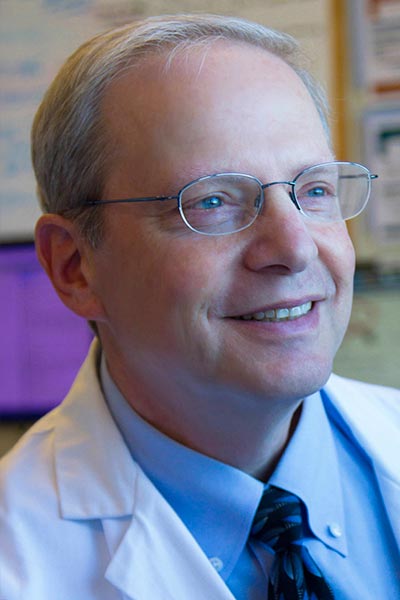
In 2015, Robert Wachter, MD, published The New York Times Best Seller, The Digital Doctor: Hope, Hype, and Harm at the Dawn of Medicine’s Computer Age. The book traces the health care industry’s rocky transition from paper-based medical records to electronic health records, a gargantuan undertaking that one could argue has delivered underwhelming results, with many unintended consequences affecting care teams and patients alike. Dr. Wachter, who is a professor and chair of the Department of Medicine at the University of California, San Francisco (UCSF), describes the book as “grumpy” — mirroring the attitude of many doctors about their EHRs.
“I’ve been waiting for the last 10 years for technology to come along and take advantage of all the data we now have in computable form. The first time I tried ChatGPT on Nov. 30, 2022, a lightbulb went off, and I said, ‘This is it!’” he explained.
After striking a book deal, Dr. Wachter set out to learn all he could about artificial intelligence (AI) and discern its potential impact on the health care industry. After years of extensive research and more than 100 interviews with experts across medicine, technology, policy, and business, he released A Giant Leap: How AI Is Transforming Healthcare and What That Means for Our Future on Feb. 3. The book examines how AI is already entering hospitals and clinics to impact patient care while unflinchingly confronting the risks of AI. It’s already appeared on several national bestseller lists, and he has appeared on CBS Sunday Morning, NPR, the “Freakonomics” podcast, and in The New York Times.
Dr. Wachter will deliver a can’t-miss keynote lecture titled, “How AI is Transforming Health Care,” at the ATS 2026 International Conference Opening Ceremony, from 4:15 to 5:30 p.m. ET on Saturday, May 16.
He admits he came away from this endeavor surprisingly optimistic about the prospect of AI’s integration in health care. AI doesn’t need to be perfect, he argues, it just needs to be better than the current status quo. Considering the vast areas of care that demand improvement, he came away unable to see how the industry could address them all without AI.
“Almost everywhere I look in health care, I see a system that — despite very good people working very hard, and certainly a lot of money thrown at it – does not deliver the kinds of quality, access, convenience, or cost-effectiveness that we need it to,” Dr. Wachter explained. “Our typical solutions over the last 20-30 years have been to hire more humans — nurse practitioners, physicians’ assistants, billing clerks, call center staff, you name it. Not only can we not afford it, but in many cases, we can’t even find the people anymore. So, I came out of this actually quite positive about how AI will transform health care.”
Health care has often lagged behind other industries in adopting new technologies, a trend being broken by the growing presence of AI. Dr. Wachter cited his own practice at UCSF, where staff have access to AI tools that assist with notetaking, chart summaries, billing, population health initiatives, and recommendations for diagnoses and treatments.
He points to the use of OpenEvidence, an AI tool built for clinicians, as one example. “In a year, a tool that didn’t exist has gone from unheard-of to being ubiquitous,” he said. “Almost all of that has been organic. We’ve seen how effective and useful the tools are and that they help with very important problems that we don’t have any other solutions for.”
While admittedly optimistic, Dr. Wachter is not without skepticism about the implications of AI’s expanding influence. In a period when a significant number of patients have begun to doubt science, medicine, and its practitioners, the prospect of the technology being used to spread misinformation through the use of deepfakes is daunting.
“This is a huge problem, and it’s difficult to see how we’ll even begin addressing it,” Dr. Wachter said.
Another area of concern is patients’ unmediated access to AI tools and the possibility that they will receive inaccurate and potentially harmful advice from them. Licensed medical professionals know how to identify and input into an AI tool relevant symptoms and other data, and to filter any implausible suggestions the tools might present. Without this human oversight by an expert, patients risk adopting therapeutic strategies that are, at best, ineffective, at worst, dangerous.
Dr. Wachter will also explore how AI could change providers’ roles in the long term. Acknowledging that no one can be certain where this technology will take us, as it’s still rapidly developing, he envisions a path toward an improved system for everyone.
“I want people to come away with informed optimism. We shouldn’t just accept the hype. But I think we can be genuinely hopeful that this is going to be good for patients and clinicians,” Dr. Wachter said. “To do that, we’re going to have to embrace AI and learn about it, not shy away from it.”
The Opening Ceremony is free for all registered attendees of the International Conference. This year, the Opening Ceremony will recognize the following Respiratory Health Award recipients:
- Public Service Award: Tyra Bryant-Stephens, MD
- World Lung Health Award: Payam Nahid, MD, MPH
- J. Randall Curtis Humanism Award: Lynn F. Reinke, PhD, ATSF
- Edward Livingston Trudeau Medal: Charles G. Irvin, PhD, ATSF
- J. Burns Amberson Lecture: Marc Peters-Golden, MD
The ATS thanks Boehringer Ingelheim Pharmaceuticals, Inc., for their generous support of the ATS 2026 Opening Ceremony.
Don’t Miss the ATS 2026 International Conference

Register today for the ATS 2026 International Conference to experience this year’s premier respiratory health conference, May 15-20 in Orlando. Join your colleagues to learn about the latest developments in pulmonary, critical care, and sleep medicine.
Not an ATS member? Join today and save on your conference registration!