



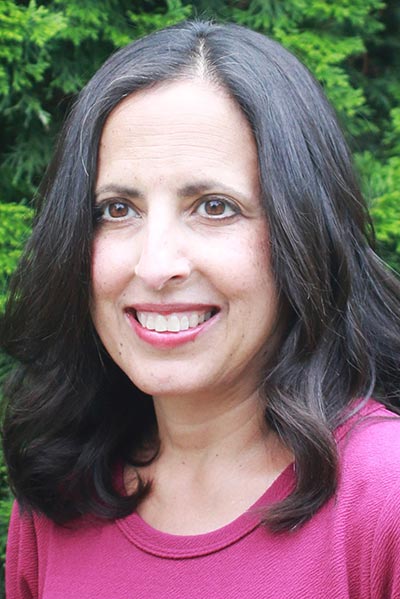
Rana L. Awdish, MD, MS, was completing the final day of her pulmonary and critical care fellowship when a mass in her liver suddenly ruptured. Seven months pregnant, she tragically lost her unborn child, went into multisystem organ failure, and nearly died herself. The odyssey of emergency surgeries and health setbacks that followed allowed her to experience her profession as a critically ill patient. When she eventually recovered, she vowed to practice differently. Today, she’s the director of the Pulmonary Hypertension Center for Comprehensive Care and the medical director of Care Experience at Henry Ford Health, the same hospital in which she received care as a patient.
This life-altering experience led Dr. Awdish to focus her career on the critical role of communication in care and the therapeutic necessity of a patient-physician relationship. She documented this journey in the landmark medical memoir, In Shock: My Journey from Death to Recovery and the Redemptive Power of Hope.
Dr. Awdish will be the keynote speaker at this year’s Plenary Session at the ATS 2026 International Conference from 11:45 a.m. to 1 p.m. ET on Tuesday, May 19. In a presentation drawing on the evocative power of art and her own experience, Dr. Awdish will illustrate how, by reclaiming the power that resides in our attention and relationships, we can transform suffering into true healing.
Viewed solely through the lens of the physical treatment Dr. Awdish received, the team that cared for her was objectively successful. The team saved her life and guided her through an effective rehabilitation process. Despite these significant successes, Dr. Awdish’s patient experience highlighted many interpersonal failings that can become embedded in the health care system.
“As a patient, I noticed that the language used to describe me (‘She’s circling the drain’, ‘She’s trying to die on us’) estranged me from my care team. As a physician, I knew I sometimes said things to get my team to move faster, to recognize the acuity of a situation,” said Dr. Awdish. “I just didn’t think about how it would land on the patient. How just hearing those words could make it feel like my team and I were on opposite sides. How those words could impact my understanding of my own capacity to heal. We can do everything perfectly medically and give someone their life back, but if we don’t attune to the unintentional harm we cause with our language and attend to the grief and suffering, it’s an incomplete form of healing.”
These errors are often understandable: Care teams are put in situations where lives are quite literally on the line. In the heat of the moment, language can seem like a tertiary concern that, if considered at all, should be cut down to its barest essentials. Some also believe that care providers should maintain a certain distance from their patients to avoid mental and emotional burnout. While understanding the rationale behind these lines of thinking, Dr. Awdish maintains they are misguided.
“It’s a common misperception that allowing ourselves to see the full scope of someone’s experience in the context of their life will somehow impair our ability to care for them or deplete us. But this assumes that these relationships are purely one-directional and extractive. It assumes giving without receiving anything in return,” she explained. “When we allow ourselves to be in relationship with our patients, to meet them as fully human, and also allow ourselves to be more fully human, more becomes available for both parties. We enter into the fullness of an experience that asks more of us, while also nourishing and replenishing us. The care is reciprocal.”
Since her experience as a patient, Dr. Awdish has strongly advocated for empowering patients by taking an active, collaborative role in their care with their care team and improving communication within these relationships. To further these efforts, she has led communication workshops and professional development sessions for the residents and faculty at her own hospital.
“It has been encouraging to me to see clinicians approach these trainings with vulnerability and humility. To admit that these conversations can be difficult and that we do need practice. Not only because it opens them to receive the experience, but because it’s an admission of our own humanity,” Dr. Awdish said. “For too long, we have been asked to compartmentalize and ignore our own physical needs, our bodies, and emotions. We’ve sacrificed so much to emulate some idealized version based on medicine’s value system, and it didn’t work. That self-negation led to burnout and attrition from our field; it contributed to high rates of substance use, self-harm, and even suicide. By reclaiming our full humanity, working to become fully embodied healers who are aware of their own internal state and can self-regulate their emotions rather than suppress them, we are moving towards truly becoming healers.”
On June 16, Dr. Awdish will release her much-anticipated second book, After Shock: Learning to Reinhabit My Body After Illness. Her follow-up book examines her estrangement from her chronically ill body and practices that led to acceptance, which in turn led to insightful revelations about the true nature of recovery. Dr. Awdish has generously shared 500 signed, advance copies with the ATS, which International Conference attendees can pick up for a $25 donation in the ATS Store.
“I explore the ways that my medical training really estranged me from my body and taught me to devalue my own innate wisdom,” Dr. Awdish explained. “For a long time, I viewed bodies as lacking agency; they were just something that broke. They were objects we acted upon because it was our job to fix them. That objectification habituated me not to trust my body, which felt more like a timed explosive device than a home anyway. A big part of my recovery has been reconceiving bodies as trustworthy, intuitive, and wise. Sick bodies deserve profound reverence. They are the sites of healing, mystery, and wisdom. We just facilitate the healing.”
The Plenary Session is open to all registered attendees of ATS 2026 Orlando, and will also include the ratification of the 2026-2027 slate of leaders, as well as remarks from outgoing president Raed A. Dweik, MD, MBA, ATSF, and incoming president Michelle Ng Gong, MD, MS, ATSF.
Don’t Miss the ATS 2026 International Conference

Register today for the ATS 2026 International Conference to experience this year’s premier respiratory health conference, May 15-20 in Orlando. Join your colleagues to learn about the latest developments in pulmonary, critical care, and sleep medicine.
Not an ATS member? Join today and save on your conference registration!